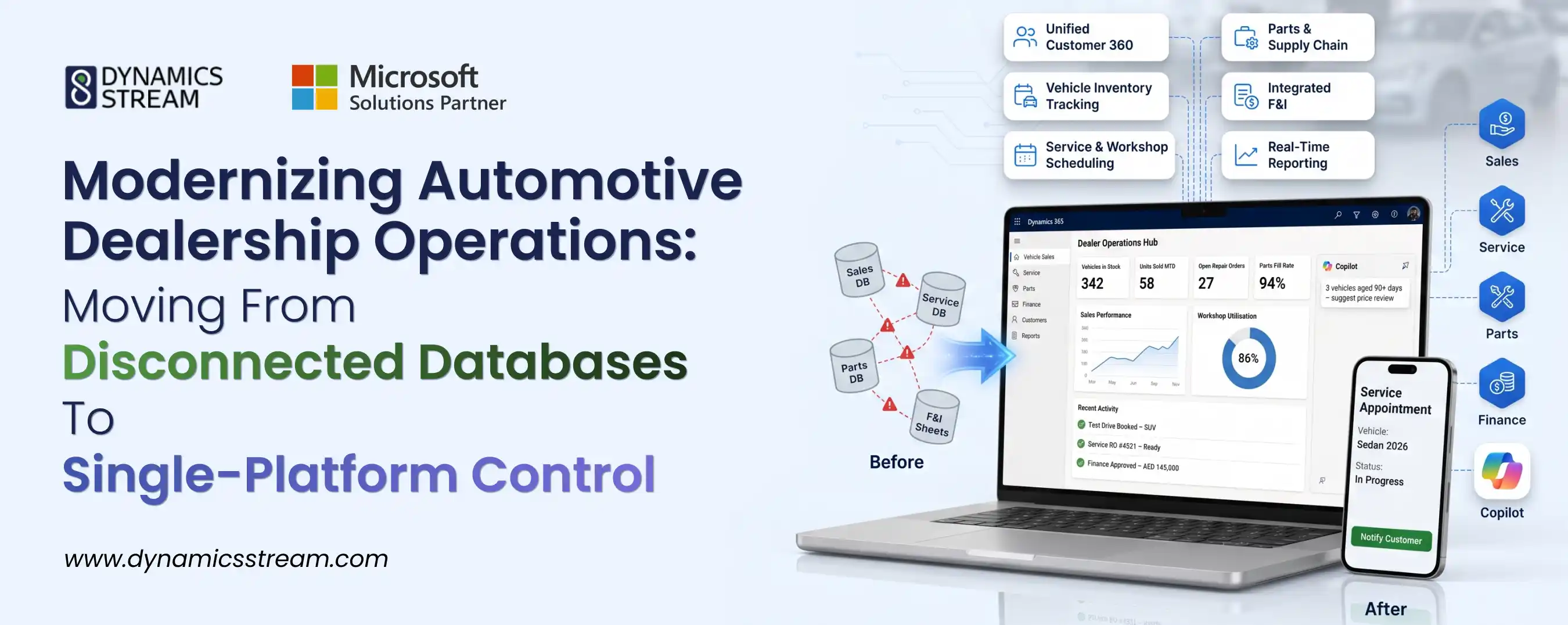
Modernizing Automotive Dealership Operations: Moving from Disconnected Databases to Single-Platform Control

A service advisor cannot access a customer's maintenance history while the vehicle is sitting in the service bay. A marketing coordinator sends a discount promotion for a compact sedan to a client who bought an SUV five days ago. A critical customer complaint about a defective transmission part sits unanswered for a week because three different departments are passing around an unmonitored spreadsheet.
These operational hurdles are common across regional car dealerships and dealer groups. Showrooms display high-performance engineering from manufacturers such as Toyota, Hyundai, BMW, and Mercedes-Benz, yet behind the scenes, staff wrestle with software tools that cannot share records. The consequence is lost workshop hours, uncoordinated customer communications, and unnecessary customer defection.
To correct these administrative inefficiencies, dealer groups replace isolated point solutions with a unified automotive CRM solution that links customer service, service workshops, and central accounting into one database. Working with a specialized Dynamics 365 partner in Dubai ensures that these systems connect directly to dealer management workflows, workshop scheduling, and financial ledgers without disruptions to daily trade.
The Cause of Operational Friction: Fragmented Systems
An automotive group typically relies on four to six separate applications to manage daily transactions:
-
Dealership Management Systems (DMS) for vehicle inventory and sale agreements
-
Workshop scheduling tools for technician allocation and bay utilization
-
Telephony and messaging systems for call center inquiries
-
Standalone accounting software for invoicing, payroll, and vendor payments
-
Web analytics tools and lead generation portals for website visitors
When these systems do not synchronize data, staff waste significant time re-entering basic customer names, vehicle identification numbers (VIN), and service logs across platforms. Errors occur, service advisors lack visibility into previous complaints, and accounting teams struggle to reconcile warranty claims against actual parts inventories.
Connecting these disconnected touchpoints through Microsoft Dynamics 365 establishes a centralized customer profile. Every recorded interaction test drive dates, warranty documentation, routine servicing records, parts replacements, and unresolved complaints attach directly to the customer's permanent record. Engaging an experienced ERP implementation partner in UAE allows automotive groups to align these front-end customer touchpoints directly with backend warehouse inventory, procurement records, and general ledgers.
Structured Complaint and Service Recovery Workflows
Handling customer disputes efficiently determines whether an owner returns for future maintenance or switches to an independent garage. When complaints depend on manual emails and handwritten notes, service managers miss contractual resolution windows.
Dynamics 365 Customer Service introduces rule-based intake and resolution workflows:
-
Automated Ticket Creation: Inbound inquiries from phone calls, WhatsApp, web forms, or showroom visits generate a tracked support case automatically, pre-populated with customer and vehicle details.
-
Direct Task Assignment: Tickets route directly to the designated department owner, such as workshop foremen, warranty officers, or parts coordinators based on predefined business rules.
-
Service Level Agreement (SLA) Tracking: Countdown timers start the moment a ticket is created. If an issue remains unaddressed within the required timeframe, the system flags the case and alerts dealership managers before the customer escalates the issue.
-
Proactive Outreach on Negative Feedback: When a customer completes a post-service feedback questionnaire with a poor satisfaction rating, the system triggers a priority follow-up case, prompting the customer relations team to contact the owner directly before public reviews are submitted.
Targeted Marketing Using Real Service and Ownership Timelines
Broad email and SMS blasts that promote irrelevant vehicles irritate existing customers and waste marketing funds. When marketing staff work from real-time customer data, messages reflect the actual lifecycle stage of each vehicle owner:
-
Scheduled Service Reminders: Owners approaching mileage thresholds or annual service intervals receive automated maintenance reminders via WhatsApp or SMS, linked directly to an online bay booking portal.
-
Warranty Expiration Outreach: The system alerts vehicle owners sixty days before their factory warranties expire, presenting clear options to purchase extended warranty packages or schedule pre-expiry inspections.
-
Fleet and Commercial Buyers: Corporate accounts with multiple registered commercial vehicles route directly to commercial account managers rather than standard consumer queues.
-
Purchase Inquiry Nurturing: Prospective buyers who configure specific vehicle trim levels or book multiple test drives receive technical specifications and financing details matched to that specific model line.
Standardizing Goodwill and Compensation Approvals
When a repair job experiences unexpected delays or replacement parts are backordered, dealerships often issue customer compensation, such as free maintenance vouchers, complimentary rental vehicles, or parts discounts. In many dealerships, these concessions are handled informally without financial controls or approval standards.
An integrated enterprise platform establishes clear governance over customer concessions:
-
Formula-Based Calculations: Concession amounts calculate systematically against parameters such as days of workshop delay, parts availability timelines, and original invoice amounts, eliminating manual guesswork.
-
Tiered Approval Hierarchies: Clear spending thresholds require supervisor, branch manager, or finance director sign-off before a voucher or payment is issued.
-
Auditable Accounting Integration: Approved goodwill credits post directly to designated cost accounts in the general ledger. Finance teams no longer need to track down lost approval emails during monthly reconciliations.
Core Performance Metrics for Automotive Management
Automating back-office workflows provides senior management with reliable, real-time operating metrics:
-
First-Contact Resolution Rate: The percentage of inbound technical and service questions answered without transferring the caller or opening a secondary ticket.
-
Average Case Duration: The exact hours and minutes elapsed between customer ticket creation and complete sign-off.
-
SLA Adherence Percentage: The proportion of service requests and repair orders completed within the agreed service window.
-
Service Retention Rate: The percentage of vehicle buyers who continue servicing their cars at authorized dealer workshops after the initial complimentary maintenance period concludes.
Modernizing dealer operations from disconnected software systems to a unified platform reduces operational overhead, enforces financial governance across branches, and ensures car owners receive reliable support throughout the ownership lifecycle. Automotive companies that build their operations on connected data protect their service revenue and maintain steady customer retention in an increasingly competitive market.
To modernize your dealership operations and integrate your workflow with Dynamics 365, get in touch with our expert at Dynamics Stream today.
Written by:
Rabik Raja, Director Sales at Dynamics Stream Software Solutions LLC.
Share with






Give us your details.
We’ll get in touch.
Rabik Raja
Director Sales and Account Management
Mahmoud Mohamed
Dynamics 365 Sales Specialist


Our Readings